1. Essence: Prioritize examination Cleaning capacity (Gbps/Tbps) and Cleaning Center Distribution and attack history tell us that capacity is the real key to determining whether it can withstand heavy traffic surges.
2. Essence: There must be multiple layers WAF The combined strategy of behavior analysis + rate limiting: Relying solely on bandwidth is only a temporary solution; it’s application-layer attacks that will silently consume your business.
3. Essence: Select Hong Kong region High defense It also depends on cross-border latency and the origin-pull path: BGP Anycast Multiple access points and local cleaning can simultaneously ensure both resistance to attacks and low latency Delay .
In the real history of attacks and defenses over the past few years, we have seen attacks targeting Hong Kong nodes evolve along two main lines: One is the massive scale DDoS (UDP/ICMP/UDP reflection, etc.), and secondly, covert application-layer attacks (HTTP Flood, slow POST, API abuse). Therefore, simply “buying more bandwidth” is no longer enough; it’s necessary to do so at the architectural level High defense The design aims to strangle the opponent at the edge.
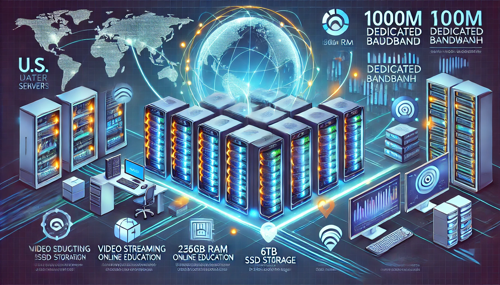
First, let’s look at the traffic aspect: When the opponent launches a Tb-level flood, the supplier’s true Cleaning capacity Coordination with upstream and downstream backbone networks determines whether you can continue to access the network. Select Hong Kong server When considering high-level protection solutions, it’s important to ask questions clearly: What is the peak cleaning bandwidth? Is there Anycast distribution across the entire network? Is black hole isolation and intelligent origin-pull provided? Such parameters are more valuable at the scene of an attack than fancy slogans.
Next is application-layer protection. Historical attacks show that attackers are increasingly using low-speed, random UA strings with characteristics of legitimate requests to bypass simple traffic thresholds. Therefore, mature WAF And it's essential for behavior analysis engines. Products that can handle JavaScript challenges, fingerprinting, session behavior analysis, and near-real-time rule enforcement are preferred, as they can block over 95% of malicious requests without compromising the normal user experience.
The third point is network architecture and cross-border strategies. As an international export hub, Hong Kong has many key businesses facing a two-way demand “toward the mainland.” When selecting a supplier, be sure to confirm whether it has multi-operator access and whether it supports it BGP Anycast Can CN2 or direct optimization channels be provided? Historical cases show that single-path backhaul during attacks amplifies congestion and latency, turning second-level business responses into minute-long delays, which affects conversions and the brand.
Operations and response also determine success or failure. In real attacks, many services fail in terms of being able to recover quickly: No clear SLAs, no 24/7 emergency support, no attack logging or forensics capabilities. Give priority to those that provide real-time alerts, downloadable records of cleaned traffic, reports on attack tracing, and dedicated emergency response teams High defense Service provider.
Compliance and data governance cannot be ignored: When connecting to Hong Kong servers, high-security solutions must meet both local and customer’s business location compliance requirements (example: Processing of personal sensitive data, audit of cross-border transfers, etc.). When making a choice, it is necessary to confirm whether encrypted origin-pull (TLS), enhanced logging, and auditable event recording are provided, in order to meet regulatory and legal requirements in the event of a security incident.
Cost and testability: Don’t be deceived by the promise of “unlimited protection at a fixed price.” Throughout history, many services have failed because suppliers chose to sacrifice smaller customers in order to protect larger ones during peak times. Require simulated attack drills (red team/stress testing) before signing the contract, and include them in the contract’s SLAs: Including cleaning startup time, maximum false positive rate, Recovery Time Objective (RTO), and compensation mechanism.
Deployment Recommendations (Practical Checklist): 1) Deploy at the edge of Hong Kong Anycast +Clean nearby ; 2) The origin server uses multiple links and intelligent origin-pull ; 3) Enable behavior-based WAF Rate limiting ; 4) Enable TLS terminal detection and certificate automation ; 5) Conduct regular attack simulations and save forensic logs. By following this checklist, over 80% of common attacks can be turned into “noise”.
When comparing options, the key indicators to verify include: Peak cleaning capacity (Gbps/Tbps), average monthly cleaning time, SLA response time, false positive rollback mechanism, log exportability, cross-border network optimization capabilities, and whether 7x24 security engineer support is available. These hard metrics need to be written into the contract so they can be enforced at critical moments.
Finally, regarding “exciting advice””: Don’t place all your trust in a single vendor or a single protection strategy. True robust protection is a combination of “layering + testing + contractual safeguards”. History has proven time and again that the outcome of battles often lies in the details: Whether rules are issued in a timely manner, whether there is origin-pull circuit breaking, and whether it’s possible to scale up quickly during peak times—are all key factors that determine whether your business can “get through” these challenges.
As a conclusion: If your business relies on Hong Kong nodes for core transactions, user data, or real-time matching, choose Hong Kong server of High defense The solution isn’t just about buying the cheapest option; decisions should be based on attack history, verifiable cleaning capabilities, enforceable SLAs, and practical testing. Quantifying each protective capability and including evidence collection and emergency drills in the contract is the true way to protect your critical business.
- Latest articles
- Alibaba Cloud Korea Lightweight Servers Are Very Cheap—real-life Case Sharing Of Low-cost Deployment
- Script Automation Practice Teaches You How To Use Malaysian VPS For Rapid Batch Deployment
- A Practical Case Study Of How Taiwanese Native Residential IPs Improve Conversion Rates In Advertising Placements
- Decision Guide: Can You Build Your Own Native Korean IP? Is It Suitable For Small And Medium-sized Enterprises Or Large Clients?
- Detailed Analysis Of Domestic And International Data Center CN2 VPS Adaptation Application Scenarios In Vietnam
- Resource Allocation And Cost Control Recommendations For Hong Kong Server VPS Systems In Different Scenarios
- Case Study: How Much Does It Cost To Rent A VPS In South Korea? Actual Expenses For Small And Medium E-commerce And Content Sites
- How To Enhance Cross-border Users' Login And Payment Experiences Through Native IPs In Vietnam And Hong Kong
- Singapore CN2 Cloud Server Performance Review And In-Depth Analysis For Business Scenarios
- Analysis Of Typical Cases Of Amazon Japan Review Groups And Design Of Compliance Assessment Schemes
- Popular tags
-
What Types Of Websites Are Hong Kong’s High-hardware Defense Servers Suitable For?
understand which types of websites are suitable for using hong kong’s high-hardware defense servers to improve website security and protection capabilities. -

3 Major Hong Kong High-defense Server Recommendations To Meet Different Needs
three hong kong high-defense servers are recommended to meet the needs of different users, suitable for all kinds of websites and applications, and provide safe and reliable services. -

What Is Native Hong Kong Ip And How To Get It On The Network
learn what is native hong kong ip and how to get it on the internet, and recommend dexun telecom to provide high-quality network services.